
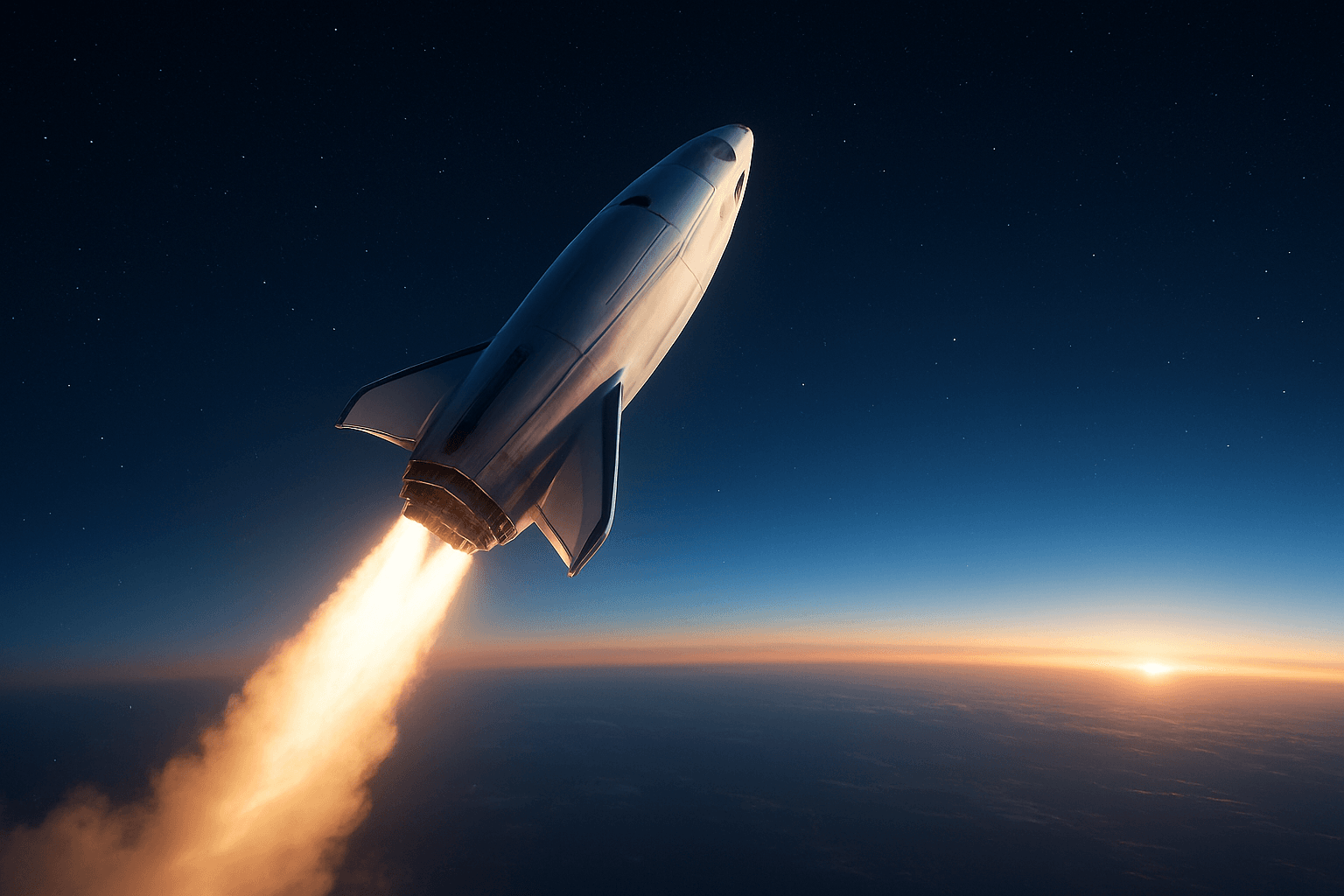

Top 10 space tourism companies and their mission goals to watch in 2024
The top 10 space tourism companies are revolutionizing how humans experience the final frontier, blending cutting-edge technology with unprecedented accessibility. From suborbital joyrides to orbital getaways, these pioneers are turning sci-fi dreams into reality, each with distinct mission goals that redefine the boundaries of commercial space travel.

The evolution of space tourism: From sci-fi to reality
Space tourism was once confined to the pages of Arthur C. Clarke’s novels, but the top 10 space tourism companies have transformed it into a multi-billion-dollar industry within just two decades. The journey began in 2001 when Dennis Tito became the first space tourist aboard a Russian Soyuz mission, paying $20 million for an eight-day stay on the International Space Station (ISS). Since then, technological advancements and private investments have slashed costs, making space travel increasingly accessible. Today, companies are not just selling tickets to low Earth orbit but also planning lunar flybys, orbital hotels, and even Mars missions, proving that the final frontier is no longer a distant dream.
The shift from government-led space programs to commercial ventures has been pivotal. NASA’s Commercial Crew Program and partnerships with companies like SpaceX and Boeing have accelerated this transition. Meanwhile, startups like Space Perspective and Astrolab are exploring unconventional methods, such as high-altitude balloons and lunar rovers, to offer unique experiences. As competition intensifies, the top 10 space tourism companies are racing to define the next era of human spaceflight, where ordinary people—rather than just astronauts—can explore the cosmos.
Milestones that shaped modern space tourism
The launch of SpaceX’s Crew Dragon in 2020 marked a turning point, as it became the first private spacecraft to transport humans to the ISS. This milestone not only reduced NASA’s dependence on Russian rockets but also demonstrated that private companies could safely and reliably ferry civilians to space. Virgin Galactic’s suborbital flights in 2021 further validated the commercial viability of space tourism, proving that short, adrenaline-pumping trips could attract paying customers. Meanwhile, Blue Origin’s New Shepard achieved multiple successful test flights, showcasing reusable rocket technology that could drastically cut costs. These breakthroughs have set the stage for the ambitious projects underway by the top 10 space tourism companies, from orbital habitats to lunar bases.
Regulatory frameworks have also evolved to accommodate this burgeoning industry. The U.S. Federal Aviation Administration (FAA) and other global agencies have established guidelines for commercial spaceflight, ensuring safety while fostering innovation. The rise of spaceports, such as Spaceport America in New Mexico and the planned launch sites in Florida and Texas, has provided the infrastructure needed to support frequent missions. As these companies refine their technologies, the dream of affordable space vacations inches closer to reality, reshaping not just tourism but humanity’s relationship with the universe. This section covers practical details about Top 10 space tourism.
Blue Origin: Suborbital dreams and lunar ambitions
Founded by Jeff Bezos in 2000, Blue Origin has emerged as a dominant force in the top 10 space tourism companies, with a mission to build a future where millions of people can live and work in space. While its suborbital New Shepard rocket has already flown over 20 test missions, Blue Origin’s ambitions extend far beyond joyrides. The company’s long-term vision includes developing the Blue Moon lunar lander, a critical component of NASA’s Artemis program, and eventually establishing permanent human settlements on the Moon. For space tourists, Blue Origin offers a glimpse of the cosmos through its reusable rockets, which promise a smooth, capsule-based experience for those willing to pay the premium price tag.
New Shepard: The gateway to accessible spaceflight
Blue Origin’s New Shepard rocket is designed to carry up to six passengers to the edge of space, where they experience several minutes of weightlessness and breathtaking views of Earth. Unlike traditional rockets that burn up on re-entry, New Shepard is fully reusable, significantly reducing the cost per flight. The capsule features large windows, providing an unobstructed view of the planet below—a key selling point for tourists seeking the ultimate selfie opportunity. While tickets for New Shepard flights are estimated to cost around $250,000 per seat, this price is expected to drop as demand grows and production scales up. For now, the top 10 space tourism companies see New Shepard as a stepping stone toward more ambitious projects.
The rocket’s name pays homage to Alan Shepard, the first American in space, underscoring Blue Origin’s commitment to honor the pioneers of spaceflight. Since its first crewed flight in 2021, New Shepard has completed multiple missions, including flights carrying celebrities like William Shatner and Laura Shepard Churchley (Alan Shepard’s daughter). These high-profile passengers have helped generate buzz around Blue Origin’s offerings, positioning the company as a serious contender in the space tourism race. As the company prepares to launch its orbital-class New Glenn rocket, the future of suborbital tourism looks brighter than ever. In depth, Top 10 space tourism stands out as a core theme.
Blue Moon lander: Paving the way for lunar tourism
Blue Origin’s Blue Moon lander is a cornerstone of the company’s lunar ambitions, designed to transport cargo and eventually humans to the Moon’s surface. The lander is part of NASA’s Artemis program, which aims to return astronauts to the Moon by 2026, but Blue Origin has also expressed interest in offering lunar tourism experiences. The Blue Moon variant, known as Blue Moon Mark 1, will first be used for uncrewed missions to deliver supplies to the Moon, testing technologies that will later support crewed landings. For tourists, the possibility of walking on the lunar surface—or simply orbiting the Moon—represents the ultimate bucket-list experience. Applying Top 10 space tourism knowledge helps in real situations.
The lander’s design includes a spacious cargo bay capable of carrying up to 3.6 metric tons of supplies, making it versatile for both scientific and commercial missions. Blue Origin has partnered with NASA and other international agencies to ensure the lander meets stringent safety and performance standards. While lunar tourism is still in its infancy, the top 10 space tourism companies recognize that the Moon will be the next major destination for adventurous travelers. Blue Origin’s focus on reusability and modular design could make it a leader in this emerging market, offering both scientific value and unforgettable experiences.
Virgin Galactic: Pioneering suborbital experiences
Virgin Galactic, founded by Sir Richard Branson, has long been synonymous with luxury space tourism, offering a premium experience that blends adventure with elegance. The company’s SpaceShipTwo vehicle is designed to carry six passengers and two pilots to an altitude of approximately 50 miles, where they experience a few minutes of weightlessness and panoramic views of Earth. Unlike traditional rockets, SpaceShipTwo is air-launched from a carrier aircraft, providing a smoother ascent and reducing the physical strain on passengers. With a ticket price of around $450,000, Virgin Galactic caters to high-net-worth individuals seeking a once-in-a-lifetime adventure. In summary, you can take informed steps on Top 10 space tourism.
Virgin Galactic’s mission extends beyond tourism; the company aims to democratize space access by reducing costs and increasing flight frequency. Its next-generation Delta-class spaceships, expected to debut in 2026, will significantly boost capacity, allowing for up to 12 flights per month. This scalability is crucial for the top 10 space tourism companies, as it will make space travel more accessible to a broader audience. Additionally, Virgin Galactic has partnered with the Italian Air Force and other organizations to conduct scientific research during suborbital flights, demonstrating the dual-use potential of its technology.
SpaceShipTwo: The luxury suborbital experience
SpaceShipTwo’s unique design includes a feathered re-entry system, which enhances stability and comfort during the descent. The cabin is equipped with large windows, allowing passengers to marvel at the curvature of Earth and the blackness of space. Each flight lasts approximately 90 minutes, with the actual weightless experience lasting around four minutes—just enough time to float, take photos, and savor the moment. Virgin Galactic’s focus on luxury extends to its customer experience, from pre-flight training in the Mojave Desert to post-flight celebrations at Spaceport America in New Mexico. Overall, Top 10 space tourism is valuable for anyone exploring this topic.
The company’s recent success in completing its first commercial spaceflight in 2023 marked a significant milestone, proving that suborbital tourism is not just a novelty but a viable industry. Virgin Galactic’s long-term goals include expanding its fleet and offering orbital flights, potentially partnering with companies like SpaceX to enable multi-day missions. As one of the top 10 space tourism companies, Virgin Galactic is well-positioned to lead the charge in making space tourism a mainstream luxury experience.
Statistical Data: Top 10 space tourism companies and their mission g
SpaceX: Orbital hotels and Mars colonization
SpaceX, founded by Elon Musk, has redefined the possibilities of space tourism with its ambitious projects, including orbital hotels, lunar flybys, and Mars colonization. The company’s Crew Dragon spacecraft has already transported astronauts to the International Space Station (ISS) for NASA, but SpaceX’s vision extends far beyond government contracts. For space tourists, SpaceX offers a range of experiences, from short orbital jaunts to multi-day lunar vacations. With reusable rockets and a focus on cost reduction, SpaceX aims to make space tourism as routine as air travel—though the price tag remains out of reach for most. Learning about Top 10 space tourism makes a real difference.
SpaceX’s Starship, currently under development, is poised to revolutionize space travel with its fully reusable design and massive payload capacity. The company’s goal is to establish a permanent human presence on Mars, but in the meantime, it’s laying the groundwork for commercial space stations and orbital tourism. SpaceX’s partnership with Axiom Space to launch private astronaut missions to the ISS demonstrates its commitment to expanding access to space. As one of the top 10 space tourism companies, SpaceX is uniquely positioned to shape the future of interplanetary travel.
DearMoon project: Lunar tourism on the horizon
The DearMoon project is SpaceX’s most ambitious space tourism endeavor to date, aiming to send a crew of civilians on a week-long lunar flyby mission aboard the Starship spacecraft. Funded by Japanese billionaire Yusaku Maezawa, the project will carry eight artists, creators, and other creative individuals on a journey around the Moon, with the goal of inspiring new forms of art and expression. While the exact timeline remains uncertain, the DearMoon project represents a bold step toward making lunar tourism a reality. For the top 10 space tourism companies, this mission highlights the potential for space travel to become a cultural and artistic phenomenon, not just a scientific one.
The spacecraft for the DearMoon mission will use SpaceX’s Starship, which is designed to carry up to 100 metric tons of cargo to low Earth orbit. This capacity makes it ideal for lunar missions, as it can transport not just humans but also supplies and equipment. The project’s success could pave the way for other lunar tourism initiatives, including orbital hotels and even surface missions. As SpaceX continues to test and refine its Starship, the top 10 space tourism companies are watching closely, knowing that the next frontier of human exploration will be shaped by these groundbreaking efforts.
Sierra Space: Commercial space stations and orbital labs
Sierra Space is a rising star in the top 10 space tourism companies, with a focus on developing commercial space stations and orbital laboratories. The company’s Dream Chaser spacecraft, a reusable spaceplane, is designed to transport cargo and eventually passengers to low Earth orbit. Sierra Space’s ultimate goal is to build and operate the first commercial space station, known as Orbital Reef, in partnership with Blue Origin and other aerospace giants. This station will serve as a hub for scientific research, manufacturing, and tourism, offering a new paradigm for how humans live and work in space.
Sierra Space’s approach to space tourism is unique in that it prioritizes sustainability and versatility. The Dream Chaser is designed to land on conventional runways, making it easier to reuse than traditional capsules. This reusability is key to reducing costs and increasing access to space. The company’s partnership with NASA’s Commercial Orbital Transportation Services (COTS) program has already demonstrated its capability to deliver cargo to the ISS, positioning Sierra Space as a critical player in the future of orbital tourism. As one of the top 10 space tourism companies, Sierra Space is poised to redefine what it means to live and work in space.
Dream Chaser: The future of reusable spaceplanes
The Dream Chaser is Sierra Space’s flagship spacecraft, designed to carry up to seven passengers and cargo to low Earth orbit. Its lifting-body design allows for a smoother re-entry and landing compared to traditional capsules, reducing the physical stress on passengers. The spacecraft’s versatility makes it ideal for a range of missions, from scientific research to space tourism. Sierra Space has already signed agreements with NASA to deliver cargo to the ISS, and it plans to begin crewed missions in the near future. For the top 10 space tourism companies, Dream Chaser represents a new era of space travel, where reusability and comfort are paramount.
The Dream Chaser’s first orbital test flight is scheduled for 2024, with crewed missions expected to follow shortly after. The spacecraft’s ability to land on runways will enable rapid turnaround times, making it a cost-effective solution for both government and commercial missions. Sierra Space’s long-term vision includes using the Dream Chaser as a shuttle for Orbital Reef, its planned commercial space station. This station will offer amenities such as hotels, research labs, and even entertainment venues, making space tourism as accessible as a trip to a luxury resort. As the top 10 space tourism companies continue to innovate, Sierra Space is well-positioned to lead the charge in making space travel routine.
Axiom Space: Building the first private space station
Axiom Space is another key player in the top 10 space tourism companies, with a mission to build the world’s first private space station. The company’s Axiom Station will initially be attached to the International Space Station (ISS) before evolving into an independent orbital outpost. Axiom Space has already conducted several private astronaut missions to the ISS, proving that commercial space stations are not just a concept but a near-term reality. For space tourists, Axiom Station will offer a range of experiences, from short-term visits to long-term stays in a luxurious, Earth-like environment.
Axiom Space’s approach to space tourism is centered on accessibility and comfort. The company’s modules are designed to provide a high-quality living experience, with large windows, private quarters, and state-of-the-art amenities. Axiom has partnered with companies like SpaceX to transport tourists to its station, and it plans to offer a variety of packages, including scientific research, manufacturing, and even filmmaking. As one of the top 10 space tourism companies, Axiom Space is redefining the concept of space tourism, making it as comfortable and enjoyable as a stay at a five-star hotel.
Axiom modules: Luxury meets orbital science
The Axiom modules are designed to seamlessly integrate with the ISS before eventually forming an independent station. Each module includes advanced life support systems, research facilities, and comfortable living quarters, making it ideal for both tourists and researchers. Axiom’s first module, known as Axiom Hub One, is scheduled to launch in 2026 and will provide additional living and working space for ISS crew members. Future modules will expand the station’s capabilities, including a commercial lab and a luxury hotel suite. For the top 10 space tourism companies, Axiom Space is setting a new standard for what space tourism can offer.
Axiom Space’s commitment to sustainability is evident in its use of recycled materials and energy-efficient systems. The company’s goal is to create a self-sustaining orbital environment that can support long-term human presence. This focus on sustainability aligns with the broader goals of the top 10 space tourism companies, which are increasingly prioritizing environmental responsibility. As Axiom Space continues to develop its station, it is poised to become a leader in the commercial space industry, offering experiences that are as enriching as they are exhilarating.
How the top 10 space tourism companies compare in mission goals and accessibility
Choosing the right space tourism company depends on your budget, desired experience, and long-term aspirations. The top 10 space tourism companies each offer unique missions, from suborbital joyrides to multi-day lunar vacations. Suborbital flights, offered by companies like Blue Origin and Virgin Galactic, provide a taste of space with short, adrenaline-pumping trips that last just a few minutes. Orbital tourism, pioneered by SpaceX and Axiom Space, allows for longer stays in space stations or lunar flybys. Meanwhile, companies like Sierra Space and Northrop Grumman are focusing on building the infrastructure needed for sustainable space habitats. Below is a comparison of the key players in terms of mission goals, accessibility, and price points.
| Company | Mission Goals | Accessibility | Price Range | Timeline |
|---|---|---|---|---|
| Blue Origin | Suborbital flights, lunar landers, Moon settlements | High (reusable rockets) | $250,000 – $1M+ | 2024-2030 |
| Virgin Galactic | Luxury suborbital experiences, orbital flights | High (VIP experience) | $450,000 | 2024-2026 |
| SpaceX | Orbital hotels, lunar flybys, Mars colonization | Medium (scalable) | $50M+ | 2025-2035 |
| Sierra Space | Commercial space stations, orbital labs | Medium (NASA partnerships) | $50M+ (estimated) | 2026-2030 |
| Axiom Space | Private space stations, lunar tourism | Medium (ISS collaboration) | $55M+ | 2026-2030 |
The future of space tourism: Trends and predictions
The top 10 space tourism companies are not just shaping the present—they are defining the future of human spaceflight. One of the most significant trends is the shift toward orbital tourism, with companies like SpaceX and Axiom Space leading the charge. These companies are developing space stations and lunar habitats that will serve as hubs for both research and leisure. Another emerging trend is the focus on sustainability, with companies prioritizing reusable rockets, energy-efficient systems, and eco-friendly practices. This shift is crucial for making space tourism accessible and responsible, ensuring that the industry can grow without harming the environment.
Technology is also playing a pivotal role in the evolution of space tourism. Advancements in propulsion systems, life support, and habitat design are making it possible to offer longer and more comfortable missions. For example, SpaceX’s Starship and Sierra Space’s Dream Chaser are designed to carry larger crews and more cargo, reducing the cost per passenger. Additionally, companies are exploring new propulsion methods, such as nuclear thermal propulsion, which could drastically cut travel times to Mars and beyond. As these technologies mature, the top 10 space tourism companies will be able to offer experiences that are not just memorable but also more affordable and sustainable.
Emerging markets and untapped opportunities
The space tourism industry is still in its infancy, but the top 10 space tourism companies are already eyeing new markets and opportunities. One such market is the luxury segment, where companies like Virgin Galactic are offering VIP experiences that cater to high-net-worth individuals. Another untapped opportunity is the scientific and educational market, with companies partnering with universities and research institutions to offer missions focused on astronomy, biology, and climate science. Additionally, space tourism could become a major driver of innovation in fields like medicine, manufacturing, and entertainment, as companies explore the unique environment of microgravity.
The rise of spaceports is another critical factor in the industry’s growth. Locations like Spaceport America in New Mexico and the planned launch sites in Florida and Texas are becoming hubs for space tourism, offering the infrastructure needed to support frequent missions. As these spaceports expand, they will enable more companies to enter the market, fostering competition and driving down costs. The top 10 space tourism companies
📚 Related Articles: Research on Top 10 space tourism reveals interesting findings.
- The history of space exploration and future missions
- How to organize your workspace for maximum productivity
Explore this guide further Understanding Top 10 space tourism is key to success in this area.
Visit 🔰 Engaging Product Descriptions for Higher Sales for expert guides and tutorials. This section covers practical details about Top 10 space tourism.