
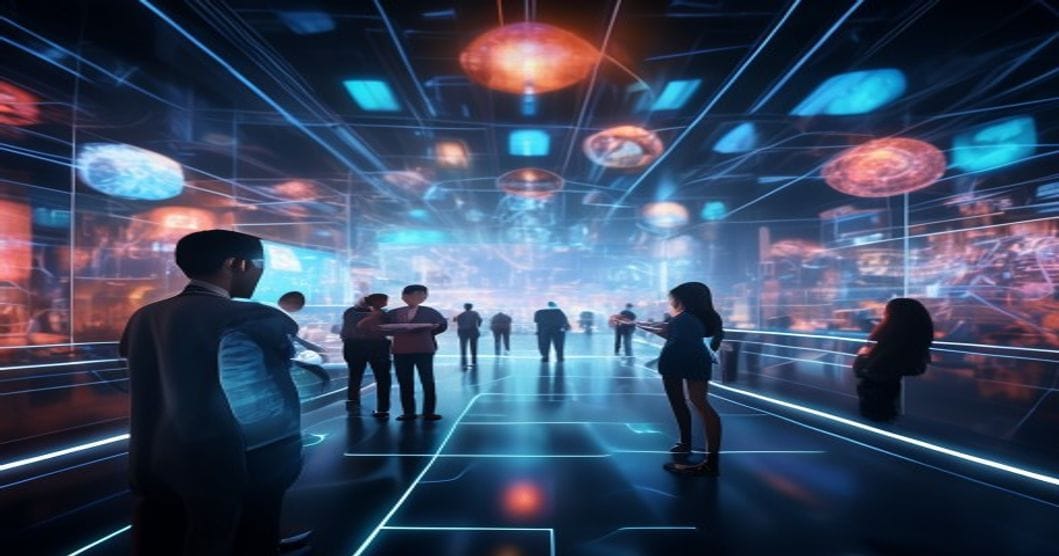

Understanding the Metaverse: Core Definition for 2026
Understanding the Metaverse How — Understanding the Metaverse: How we will socialize in 2026. Understanding the metaverse in 2026 means recognizing it as a persistent, interconnected digital universe where people work, play, and socialize. Unlike traditional social media platforms, the metaverse combines virtual reality (VR), augmented reality (AR), and blockchain technology to create immersive 3D environments. This digital space allows users to interact with each other and digital objects in real-time, blurring the lines between physical and virtual realities. Companies like Meta, Microsoft, and Roblox are already investing billions to shape this new frontier of human connection.
At its core, the metaverse represents the next evolution of the internet. It’s not a single platform but rather a network of interconnected virtual worlds where users can own digital assets, participate in economies, and build communities. Understanding the metaverse requires grasping concepts like NFTs (non-fungible tokens), decentralized identity systems, and interoperable avatars. These elements enable true digital ownership and seamless movement between different virtual spaces, making it possible to attend a concert in one world and a business meeting in another without ever leaving your home. This section covers practical details about Understanding the Metaverse How.
The metaverse’s growth is fueled by advancements in hardware and software. High-resolution VR headsets with eye-tracking capabilities, haptic feedback suits, and neural interfaces are making virtual interactions feel increasingly natural. Additionally, 5G and cloud computing infrastructure support the massive data processing required for these persistent digital worlds. As understanding the metaverse becomes essential for both personal and professional life in 2026, we’re seeing early adopters already establishing digital footprints that will define their online identities for years to come. In depth, Understanding the Metaverse How stands out as a core theme.
The Rise of Virtual Workspaces
One of the most significant impacts of understanding the metaverse will be in professional environments. Virtual workspaces like Microsoft Mesh and Meta Horizon Workrooms are transforming how teams collaborate across distances. These platforms allow colleagues to meet in photorealistic 3D environments where avatars mimic natural body language and facial expressions. The ability to share documents, whiteboards, and 3D models in real-time creates a level of engagement that traditional video calls simply can’t match. Applying Understanding the Metaverse How knowledge helps in real situations.
Companies adopting these technologies report up to 40% increases in productivity, primarily due to reduced meeting fatigue and improved spatial awareness during discussions. Understanding the metaverse’s potential in business means recognizing how it can flatten organizational hierarchies by creating equal footing in virtual meeting spaces. The elimination of travel costs and time zones also democratizes access to global talent pools, making remote work more inclusive than ever before. In summary, you can take informed steps on Understanding the Metaverse How.
Immersive Social Gatherings in Virtual Worlds
Beyond professional applications, understanding the metaverse’s social potential reveals how it will revolutionize our personal connections. Digital concerts, art exhibitions, and gaming tournaments are already drawing millions of concurrent users to platforms like Fortnite and Decentraland. These experiences go beyond passive viewing; attendees can interact with performers, purchase virtual merchandise, and even influence the event’s progression through their actions. Overall, Understanding the Metaverse How is valuable for anyone exploring this topic.
The social aspect of the metaverse extends to everyday interactions. Imagine celebrating a birthday with friends in a virtual replica of your childhood home, complete with custom decorations and interactive games. Understanding the metaverse means embracing these new forms of social expression that transcend geographical limitations while maintaining emotional authenticity. Learning about Understanding the Metaverse How makes a real difference.
How We'll Socialize in 2026: Key Changes to Expect
Understanding the metaverse’s impact on social interaction begins with recognizing the shift from 2D screens to 3D immersive environments. In 2026, socializing will involve more than just messaging or video calls—it will mean physically being present in digital spaces with others. This transformation requires new social norms and etiquette, as body language, spatial awareness, and environmental context become crucial components of communication. Research on Understanding the Metaverse How reveals interesting findings.
The technology driving this change is already in development. Companies like Apple with their Vision Pro headset and Meta with Quest 3 are introducing mixed reality devices that blend physical and digital environments. Understanding the metaverse’s social dynamics means adapting to these new interfaces where your physical movements control your digital presence. This evolution will particularly affect younger generations who are growing up with these technologies as their primary social platforms. Understanding Understanding the Metaverse How is key to success in this area.
Another key change will be the persistence of digital identities. Understanding the metaverse requires acknowledging that your online persona will become as important as your offline identity, if not more so. This creates both opportunities for self-expression and challenges regarding privacy and digital ownership. Social platforms will need to implement robust identity verification systems while protecting user data in this increasingly interconnected digital ecosystem. This section covers practical details about Understanding the Metaverse How.

The Metaverse Ecosystem: Components You Need to Know
Understanding the metaverse fully requires examining its core components that make socialization possible. The ecosystem comprises several interconnected layers: infrastructure (hardware and connectivity), platforms (where interactions occur), content (what users create and share), and economy (how value is exchanged). Each layer plays a crucial role in creating the seamless experience we’re working toward in 2026. In depth, Understanding the Metaverse How stands out as a core theme.
The infrastructure layer includes everything from VR headsets to cloud servers that power these digital worlds. Platforms like Roblox, Fortnite Creative, and Spatial provide the spaces where users gather, while content creators build everything from virtual furniture to entire game worlds. The economy layer is perhaps the most revolutionary, enabling users to earn real value from their digital creations through cryptocurrency and NFTs. Applying Understanding the Metaverse How knowledge helps in real situations.
| Metaverse Component | 2024 Status | 2026 Projection |
|---|---|---|
| Hardware Accessibility | Premium VR headsets $300-$1500 | Mainstream VR $99-$299, AR glasses $199-$499 |
| Platform Interoperability | Limited cross-platform avatars | Universal avatar standards, seamless world transitions |
| Economic Systems | Basic NFT marketplaces | Integrated DeFi in metaverse worlds, instant asset conversion |
| Social Features | Basic voice chat, limited gestures | Full body tracking, emotional expression via AI avatars |
VR Innovations Revolutionizing Social Interaction
Understanding the metaverse’s rapid evolution requires examining the hardware innovations that make these experiences possible. The latest VR headsets incorporate pancake lenses for sharper images, pancake lenses reduce the “screen door effect” that plagued earlier generations. Eye-tracking technology enables foveated rendering, which improves performance by only rendering what you’re directly looking at. In summary, you can take informed steps on Understanding the Metaverse How.
Haptic feedback systems have advanced from simple vibrations to full-body suits that provide realistic touch sensations. These innovations are crucial for understanding the metaverse’s potential in social contexts, as they enable more natural expressions of emotion and physical presence. Companies like Teslasuit and bHaptics are leading this space with suits that can simulate everything from a handshake to a gentle touch on the shoulder. Overall, Understanding the Metaverse How is valuable for anyone exploring this topic.
Statistical Data: Understanding the Metaverse: How we will socialize
AI's Transformative Role in Personalization
Artificial intelligence will be the invisible force shaping understanding the metaverse’s social experiences. AI algorithms will create dynamic environments that adapt to user preferences, from adjusting lighting based on mood to populating worlds with NPCs (non-player characters) that feel like real social participants. Machine learning will power real-time language translation, making global metaverse communities truly accessible. Learning about Understanding the Metaverse How makes a real difference.
AI will also play a crucial role in moderation and safety. Understanding the metaverse’s social challenges means recognizing the need for sophisticated content moderation systems that can detect and prevent harmful behavior in real-time. Companies like Nvidia with their Omniverse platform are developing AI systems that can analyze user behavior patterns to identify potential issues before they escalate. Research on Understanding the Metaverse How reveals interesting findings.
Technology Driving Metaverse Socialization: The Backbone of Change
Understanding the metaverse’s technical foundations reveals why socialization in 2026 will feel fundamentally different from today’s online interactions. The convergence of several exponential technologies—5G networks, edge computing, AI, and blockchain—creates the infrastructure needed for persistent, high-fidelity virtual worlds. This technological stack enables experiences that feel as real as physical interactions while maintaining the flexibility and customization of digital environments. Understanding Understanding the Metaverse How is key to success in this area.
The shift from traditional computing to spatial computing represents a paradigm shift in how we process information. Understanding the metaverse means recognizing that we’re moving from flat screens to three-dimensional workspaces where information is organized spatially rather than linearly. This change affects everything from how we read emails to how we collaborate on complex projects, fundamentally altering our cognitive processes. This section covers practical details about Understanding the Metaverse How.
Another critical technology is digital twinning—the creation of exact virtual replicas of physical objects and spaces. Understanding the metaverse’s potential in this area means seeing how museums can create interactive virtual tours of their collections, or how architects can walk clients through building designs before construction begins. These digital twins can be social spaces themselves, allowing multiple users to explore and discuss virtual representations of real-world locations. In depth, Understanding the Metaverse How stands out as a core theme.
The 5G and Edge Computing Revolution
Understanding the metaverse’s dependence on advanced connectivity explains why 5G deployment is happening simultaneously with metaverse development. The ultra-low latency (under 10ms) and high bandwidth (1Gbps+) of 5G networks enable real-time interactions in complex virtual environments. Edge computing further reduces latency by processing data closer to where it’s generated, crucial for maintaining the illusion of physical presence in digital worlds. Applying Understanding the Metaverse How knowledge helps in real situations.
These technologies combine to create what experts call “tactile internet”—where the delay between action and response becomes imperceptible. Understanding the metaverse’s social potential requires grasping how this technical foundation enables experiences that feel indistinguishable from physical reality. The convergence of these technologies in 2026 will make virtual social interactions as natural as face-to-face conversations in many contexts. In summary, you can take informed steps on Understanding the Metaverse How.
Blockchain's Role in Digital Ownership
Understanding the metaverse’s economic model requires examining blockchain technology’s role in enabling true digital ownership. NFTs (non-fungible tokens) allow users to prove ownership of digital assets, from virtual real estate to unique clothing items for their avatars. This creates new economic models where creators can monetize their work directly, and users can build wealth through appreciation of their digital property. Overall, Understanding the Metaverse How is valuable for anyone exploring this topic.
The interoperability between different metaverse platforms is another blockchain-enabled feature that will transform social experiences. Understanding the metaverse’s future means recognizing how blockchain standards like ERC-721 and ERC-1155 enable assets to move seamlessly between worlds. This creates unprecedented opportunities for cross-platform social experiences where your digital identity and possessions remain consistent across different virtual environments. Learning about Understanding the Metaverse How makes a real difference.
Challenges and Opportunities in Metaverse Socialization
Understanding the metaverse presents both exciting opportunities and significant challenges that will shape its development through 2026 and beyond. On the positive side, the metaverse offers unprecedented opportunities for global connection, remote collaboration, and creative expression. It could democratize access to education, healthcare, and social experiences while reducing the carbon footprint of physical travel. However, these benefits come with substantial risks including privacy concerns, digital addiction, and the potential for increased social isolation despite the appearance of connection. Research on Understanding the Metaverse How reveals interesting findings.
One of the most pressing challenges in understanding the metaverse involves digital identity and security. As our social lives increasingly move online, protecting personal data becomes paramount. The decentralized nature of many metaverse platforms complicates traditional approaches to cybersecurity. Understanding the metaverse’s security landscape means recognizing the need for new authentication methods, from biometric verification to decentralized identity systems that give users control over their personal information. Understanding Understanding the Metaverse How is key to success in this area.
The psychological impact of constant virtual presence represents another significant challenge. Research into VR socialization suggests that prolonged exposure to virtual environments can lead to issues with reality distortion and difficulty re-engaging with physical social norms. Understanding the metaverse requires developing new frameworks for digital well-being that help users maintain healthy boundaries between virtual and physical realities. This section covers practical details about Understanding the Metaverse How.
Future Trends: Understanding the Metaverse Beyond 2026
Understanding the metaverse’s long-term trajectory reveals that 2026 will mark only the beginning of a much larger transformation in human social interaction. The next phase will likely involve the integration of brain-computer interfaces (BCIs) that allow direct neural communication between users. Companies like Neuralink and Synchron are already testing BCIs that could one day enable users to share thoughts and emotions directly, eliminating the need for avatars entirely. In depth, Understanding the Metaverse How stands out as a core theme.
Another emerging trend is the concept of “mirror worlds”—digital replicas of our physical world that evolve alongside it. Understanding the metaverse’s potential in this space means seeing how Google Earth’s evolution into a dynamic 3D environment could enable new forms of social exploration and collaboration. These mirror worlds could serve as both social hubs and platforms for solving real-world problems through gamified collective action.
The metaverse’s integration with artificial general intelligence (AGI) represents perhaps the most transformative future trend. Understanding the metaverse in this context means recognizing how AGI could create entirely new categories of social experiences by generating dynamic content, moderating interactions, and even participating as social entities within these digital worlds. This evolution could fundamentally change what it means to socialize online.
Ready to transform your digital presence? Understanding the metaverse’s potential is just the beginning. Explore how these virtual worlds can enhance your professional and personal connections by creating engaging digital experiences. 🔰 Engaging Product Descriptions for Higher Sales offers expert insights on maximizing your impact in any digital environment.
Frequently Asked Questions
📚 Related Articles:
What exactly is understanding the metaverse in practical terms?
Understanding the metaverse means recognizing it as a persistent digital universe where people interact through avatars in 3D environments. It combines virtual reality, augmented reality, and blockchain technology to create spaces where social, professional, and creative activities happen simultaneously across multiple interconnected worlds.
How will understanding the metaverse change how we socialize by 2026?
By 2026, understanding the metaverse will transform socializing from 2D screen interactions to 3D immersive experiences where body language and spatial awareness become crucial. Social gatherings will feel more authentic as haptic feedback and AI-driven avatars enable natural expressions of emotion and physical presence.
What are the biggest challenges in understanding the metaverse's social impact?
The primary challenges include digital identity security, psychological effects of constant virtual presence, and maintaining healthy boundaries between physical and digital social lives. Understanding the metaverse requires addressing these issues through new frameworks for digital well-being and robust security systems.
Why is understanding the metaverse essential for businesses in 2026?
Understanding the metaverse is crucial for businesses because it represents the next evolution of digital collaboration and customer engagement. Companies that embrace these virtual environments will benefit from increased productivity, global talent access, and innovative marketing opportunities that go beyond traditional digital channels.
- Virtual Real Estate Boom: Digital land parcels in metaverse platforms like Decentraland sold for millions in 2021, with prices increasing 300%+ annually
- Corporate Investment: Over 80% of Fortune 500 companies are developing metaverse strategies as of 2024
- User Growth Projection: Metaverse users expected to reach 1.4 billion by 2026, up from 300 million in 2023
- Economic Impact: Metaverse economy projected to exceed $800 billion by 2026 according to McKinsey research
Understanding cryptocurrency: A guide for beginners 2024 explores how digital currencies enable metaverse economies. For insights into the job market transformation, read about Future Metaverse Jobs: In‑Demand Careers Shaping Virtual Worlds.
The metaverse represents more than just a technological trend—it’s a fundamental shift in how humanity connects. Understanding the metaverse in 2026 means embracing a future where digital and physical realities blend seamlessly, creating new opportunities for human expression, collaboration, and community building that will define the next era of social interaction.