
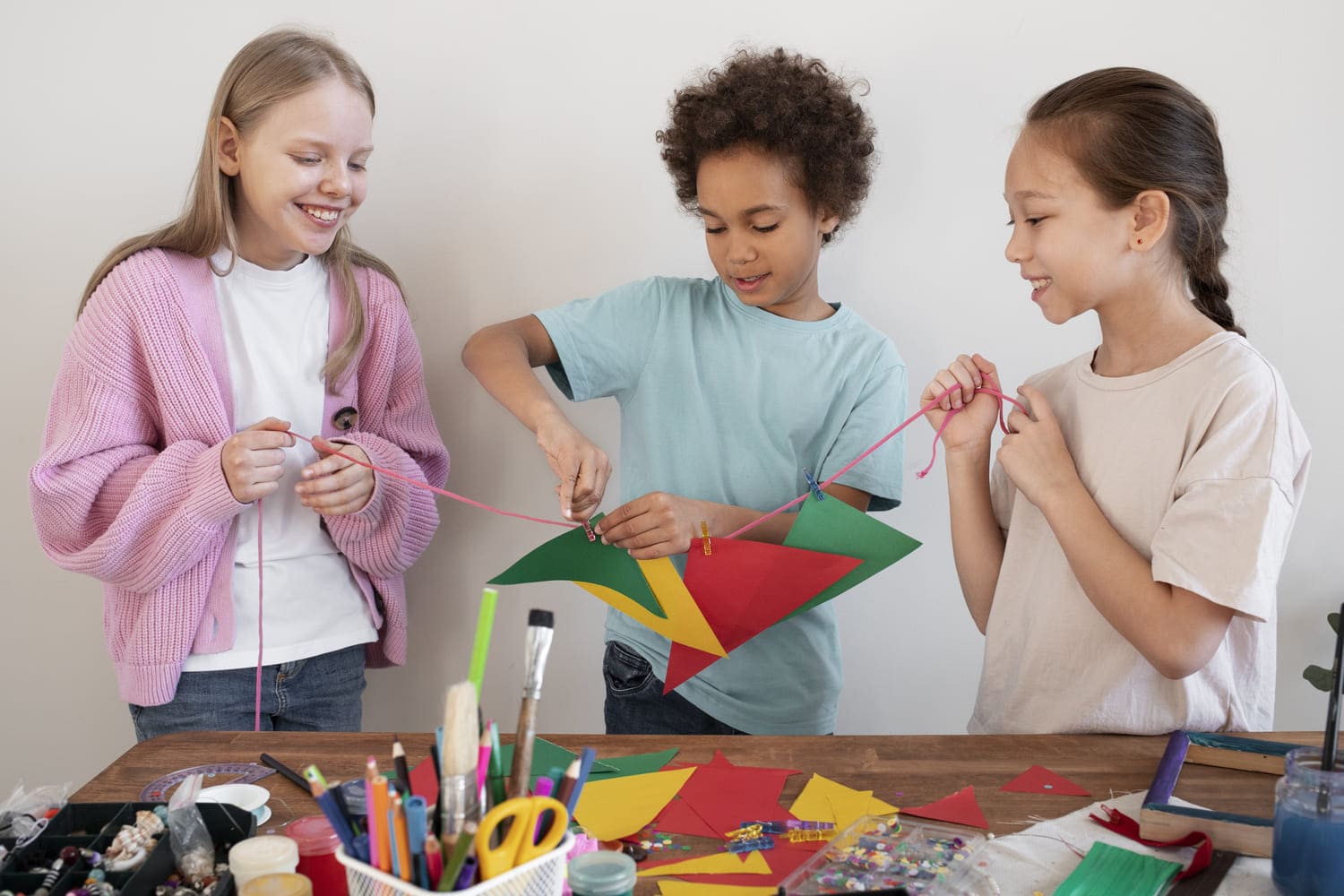

How to Make Arts and Crafts for Kids
Did you know arts and crafts for kids actually develop far more than just creative skills?
Crafting isn’t just about making cool creations – it helps children build important skills like patience, problem-solving, and fine motor coordination . Beyond the fun factor, these activities engage multiple brain areas simultaneously and improve bilateral coordination between the left and right sides of the brain, leading to immediate and future cognitive development .
While keeping kids entertained might sometimes feel challenging, we’ve compiled a list of simple crafts for kids that you can create using items you probably already have around your house. These easy arts and crafts for kids can be completed in under 30 minutes , making them perfect for busy days or when you need a quick activity.
From paper plate animals to homemade sidewalk chalk, these fun arts and crafts for kids offer the chance to explore imagination, develop new skills, and even learn about science, history, or art along the way . So gather your supplies and get ready for some crafts to do with kids that will create both memories and valuable learning opportunities!
Discover how arts and crafts for kids can unlock creativity, build patience, and offer fun learning experiences right at home.

Start with Simple Crafts Using Everyday Items
Looking around your home, you’ll find a treasure trove of craft supplies hiding in plain sight. The most memorable crafts often come from everyday items that cost nothing extra but create hours of entertainment. Let’s explore some simple starter projects that require minimal preparation yet deliver maximum fun.
You can kick off your arts and crafts for kids journey with fun projects that use only household items.

Paper plate animals and masks
Paper plates are perhaps the most versatile crafting material for young children. With just a few additional supplies, these humble plates transform into an adorable menagerie of animal friends.
For a quick polar bear craft, attach googly eyes (or draw eyes with a marker), cut out a black oval nose from construction paper, and add two round white paper ears to the top of the plate. Similarly, create a fluffy lamb by gluing cotton balls all over the paper plate, adding paper eyes with black marker pupils, and attaching a black oval nose.
Create paper plate animals and masks as a fun way to introduce arts and crafts for kids with minimal supplies.
Dalmatian dogs are another favorite – simply add black spots with a marker, attach floppy ear shapes cut from construction paper, and finish with eyes and a nose. For a fun twist, add a rectangle of red construction paper at the bottom as a collar.
These paper plate animals are perfect for younger children because they:
- Focus on white animals, eliminating the need for painting
- Reduce mess while keeping projects shorter
- Allow for personalization with simple additions like bows or feathers
Furthermore, these crafts promote fine motor skills, creativity, and can complement lessons about different animals and their habitats.
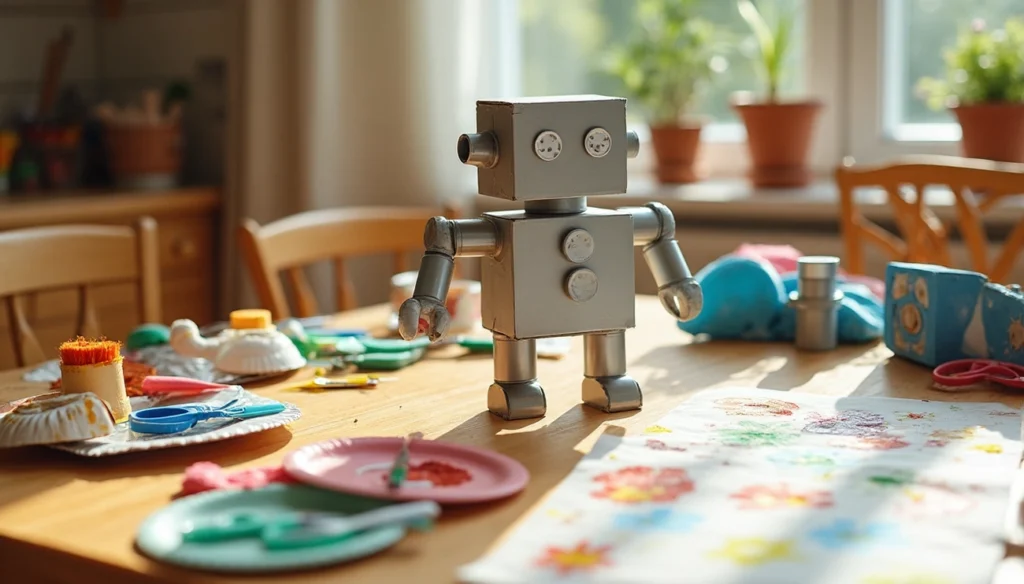
Toilet roll binoculars and telescopes
Those empty toilet paper rolls accumulating in your recycling bin? They’re actually the perfect starting point for an adventure-inspiring craft. Toilet roll binoculars take less than 30 minutes to create and are ideal for children ages 3 and up.
To make basic binoculars:
- Gather two toilet paper rolls, tape or glue, decorative materials (stickers, markers, or construction paper), string or yarn, and scissors
- Tape or glue the two toilet paper rolls side by side
- Wrap colored construction paper around the rolls and secure with tape (optional: let kids color the paper first to personalize)
- Punch holes on the outside of both rolls and tie yarn through each hole to create a strap
- Decorate with stickers, markers, or other materials
For a more durable version, adults can use a low-heat glue gun to attach the rolls. Notably, you can also create a telescope using a single paper towel roll painted and decorated similarly.
These homemade viewing tools are particularly effective at helping young explorers focus their attention when observing nature, essentially turning an ordinary walk into an exciting expedition wherever their imaginations take them.
Turn recycled toilet rolls into cool binoculars and telescopes—perfect arts and crafts for kids using what you already have.
Sponge stamps and potato prints
Printing activities offer a fascinating introduction to patterns, textures, and color mixing. Household sponges cut into basic shapes (squares, circles, triangles) make excellent stamps that are soft and easy for little hands to grip.
Sponge shape stamping is both a sensory activity and a learning opportunity. As children press the sponges into paint and onto paper, they work on shape recognition, color identification, and develop fine motor skills. This activity checks all the toddler boxes: it’s hands-on, uses materials you already have, and cleanup requires just one paper towel and a quick rinse.
Make creative sponge stamps and potato prints to add color and excitement to your arts and crafts for kids activities.
Potato printing offers similar benefits with a different texture. To create potato stamps, an adult should slice a potato in half and carve simple images into the flat surface – stars, hearts, or simple flowers work well. Children can then dip these natural stamps into paint and press them firmly onto paper or fabric.
Both sponge and potato printing activities can be adapted for different themes throughout the year. Consider creating seasonal prints like Christmas trees in winter, tulips for spring, or jack-o’-lanterns for Halloween. These versatile techniques can be used to create cards, wrapping paper, or even personalized fabric for simple sewing projects.
Creative Crafts That Spark Imagination
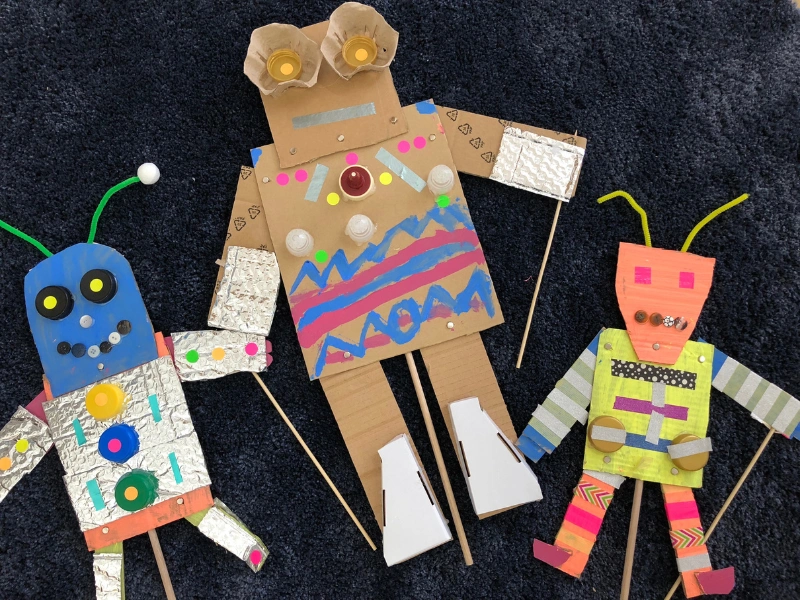
Image Source: The Artful Parent
Once your children master simple crafts, they’re ready for projects that truly ignite their imaginations. The beauty of these next-level activities lies in their open-ended nature – there’s no single “right way” to create them, encouraging children to think creatively and solve problems independently.
Make a cardboard robot or castle
That growing pile of delivery boxes in your recycling bin holds unlimited creative potential. For an impressive robot, let your children search through various cardboard pieces to select their preferred robot parts – boxes become bodies, toilet paper rolls transform into arms, and plastic containers make perfect robot features.
Build a robot or castle from cardboard—an adventurous arts and crafts for kids idea that sparks imagination.
To build a basic robot:
Use pipe cleaners for antennae or other robotic features
Secure a large box for the body with strong tape
Cut arm and neck holes in appropriate locations
Add a smaller box for the head
Decorate with paint, markers, and recycled materials
Boost imagination and storytelling through engaging arts and crafts for kids designed to inspire original creations.

Alternatively, transform those cardboard boxes into a magnificent castle. Children develop spatial awareness and problem-solving skills as they design these structures [1]. For best results, collect boxes of various sizes, then cut them into shapes for walls, towers, and other castle features. After assembling with glue or tape, add windows, doors, and decorative elements with paint and markers to create a three-dimensional fortress that will provide hours of imaginative play
Design your own monster puppet
Monster puppets allow children to explore different emotions in a safe, playful way. These creations can be as simple or elaborate as you wish, depending on available materials.
One approach involves using a worn-out sock and a lone glove that’s lost its mate [2]. Stuff the puppet with cotton balls or plastic grocery bags to give it structure, then add personality with googly eyes, buttons, or felt pieces. Hot glue (with adult supervision) works well for attaching features, although craft glue is safer for younger children.
Let children create their own monster puppet as a unique arts and crafts for kids project that brings characters to life.
Consider discussing what kind of monster you want to create – spooky, silly, or friendly – before starting. As one parent noted, her daughter insisted all their monsters be nice, reflecting her gentle spirit [2].

Create a toy camera from a box
Small cardboard boxes transform wonderfully into toy cameras that encourage observational skills and storytelling. This interactive toy requires just a box, toilet paper roll, decorative elements, and strong glue.
Start by painting your box in your chosen color. Once dry, attach a toilet paper roll cut in half as the lens – for a more realistic look, add a second ring of toilet roll to create a zoom effect [3]. For interactive play, cut a slit in one side of the camera where children can insert and pull out “photographs” made from magazine cutouts mounted on cardstock [3].
Complete the camera with a ribbon strap so your little photographer can wear their creation, then watch as they begin capturing the world through their unique perspective.
These imagination-sparking crafts not only provide entertainment, they nurture creativity, problem-solving, and emotional expression – valuable skills that extend far beyond craft time.
Transform a simple box into a toy camera for hands-on arts and crafts for kids that encourage pretend play.

Fun Arts and Crafts for Kids That Teach Something New
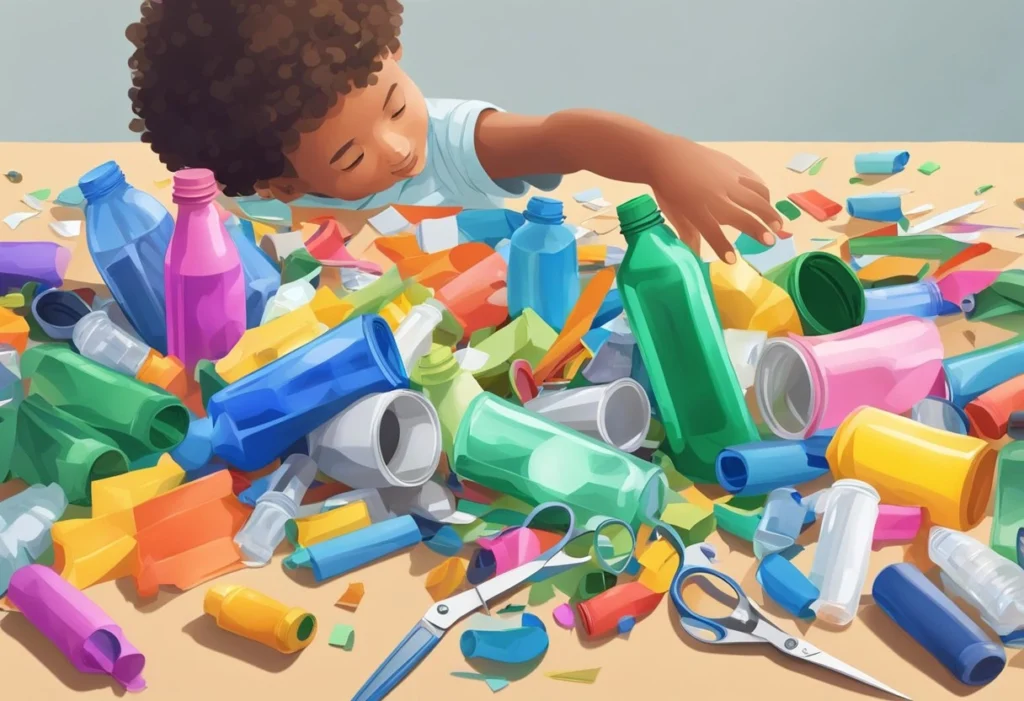
Image Source: LearningMole
Arts and crafts extend beyond creative expression into educational territory when you add a scientific twist. These projects combine the joy of making something with hands-on learning experiences that introduce fundamental concepts in engaging ways.
Combine fun with learning by choosing arts and crafts for kids that teach valuable skills through play and creativity.

🖍️ Build a recycled guitar to learn about sound
That empty shoebox sitting in your closet can transform into a musical instrument that teaches children about sound vibrations. Creating this homemade guitar requires just a few household items:
- Cut a circle out of the shoebox lid to create a sound hole
- Stretch rubber bands of varying thicknesses around the box, positioning them over the hole
- Insert pencils horizontally under the bands on both sides of the circle
- Decorate with construction paper, markers, or leftover craft supplies
Older children can enhance their instrument by adding a neck from an empty paper towel tube with popsicle stick “tuning pegs.” As kids pluck the rubber bands, explain how string instruments produce sound through vibrations. The pressure changes the strings’ length, resulting in different frequencies – shorter strings create higher pitches, while varying thicknesses produce different sounds.
Recycled guitars are fun arts and crafts for kids that demonstrate how vibrations create sound. Using shoeboxes and rubber bands, kids learn the science of pitch and frequency through hands-on arts and crafts for kids.
🎨 Paint with bubbles to explore color mixing
Bubble painting introduces children to color theory through a fascinating process that seems almost magical. For best results, follow this simple recipe ratio: 2 parts tempera paint + 2 parts dish soap + 1 part water.
Place this mixture in small cups (one for each color) and insert a straw for bubble blowing. Have children blow gently into the mixture until bubbles rise above the cup rim. Place paper directly on top of these colorful bubbles to create beautiful prints with unique patterns and textures.
Beyond the artistic experience, this activity naturally demonstrates color mixing principles. Encourage kids to overlap different colored bubble prints and observe how new colors emerge where they intersect. For outdoor adventures, consider making larger bubbles using bubble wands dipped in colored solutions.
Bubble painting is a sensory-rich arts and crafts for kids activity that teaches color theory in a playful way.
Let children mix colors with bubble prints to discover how arts and crafts for kids can bring science and art together.

🔍 Make a water microscope to magnify nature
Introduce children to the fascinating world of magnification with this simple water microscope craft:
Start with a large googly eye, carefully removing the plastic cover. Trace this cover onto the bottom of a paper cup, then cut out viewing notches on opposite sides. Secure the plastic cover inside the cup with the curve facing inward, add a few drops of water to create a pool, and your microscope is ready!
The water forms a convex lens (thicker in the middle, thinner at edges) that bends light rays, magnifying tiny objects placed underneath. Collect small specimens like flower petals, leaves, or even bugs to examine. This simple tool demonstrates the same principle pioneer scientists used before modern microscopes existed, making it both educational and historically significant.
Through these fun arts and crafts for kids, learning becomes an interactive experience where scientific principles are discovered through play instead of textbooks.
Explore the basics of magnification with this water lens arts and crafts for kids project using simple materials.
Crafting a water microscope turns observation into an exciting STEM-based arts and crafts for kids experience.
🌿 Crafts to Do with Kids That Encourage Outdoor Play
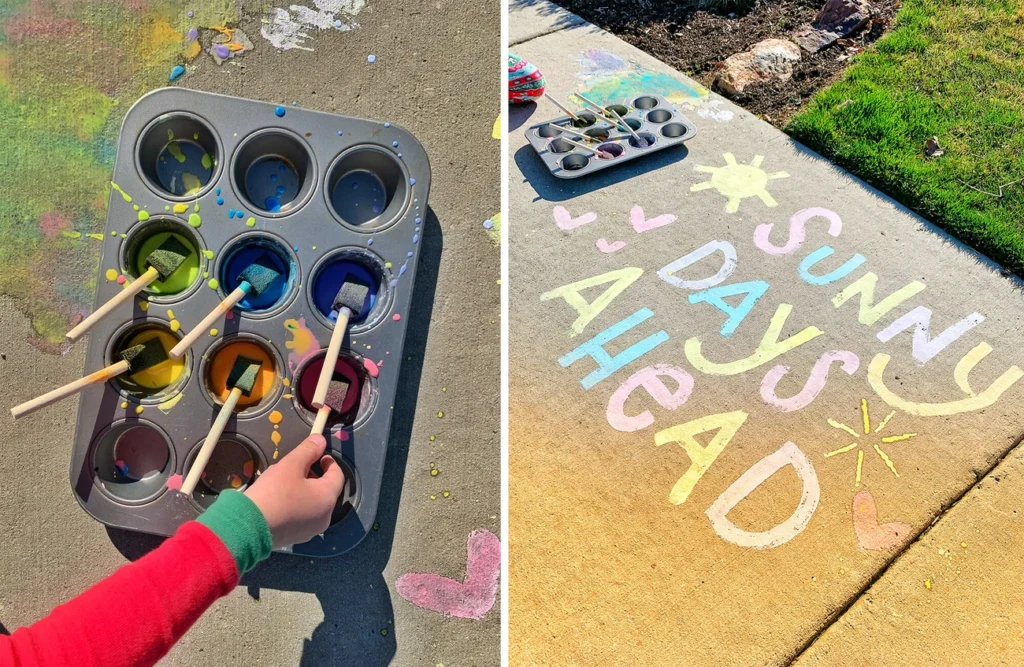
Image Source: Our Best Bites
Step outside with these crafts designed specifically for outdoor enjoyment and exploration. These projects harness natural elements alongside simple household materials to create memorable outdoor play experiences. Outdoor arts and crafts for kids like nature collages boost environmental awareness while encouraging creativity.
From sidewalk chalk to leaf prints, outdoor arts and crafts for kids transform nature into a fun learning environment.
🌈 DIY sidewalk chalk and paint
Transform your driveway into a colorful canvas with homemade sidewalk chalk paint. To create this washable masterpiece, combine:
- Two tablespoons of cornstarch
- Two tablespoons of water
- Half a tablespoon of grated sidewalk chalk
For a full rainbow palette, repeat this recipe for each color in a muffin tin. If the mixture seems too thick, add one additional tablespoon of water until it reaches a paintable consistency. Once finished, simply spray down your artwork with a garden hose—ideally before it dries completely in the sun. Homemade sidewalk chalk is a colorful way to bring outdoor arts and crafts for kids into everyday play.
Use cornstarch and chalk dust to create paintable textures in this unique arts and crafts for kids project.
🌀 Tin can windsocks and bubble wands
Those empty tin cans destined for recycling can become delightful windsocks that dance in the breeze. Begin by removing both ends of a clean tin can (covering any sharp edges with tape). Paint the outside in bright colors, then attach colorful ribbons or fabric strips around the bottom rim using craft glue. Finally, punch two holes near the top and thread string through to create a hanger.
Likewise, pipe cleaners transform into magical bubble wands. Bend and twist them into circles, hearts, or other shapes, leaving a handle. For extra sparkle, thread colorful beads onto the pipe cleaners before shaping. These homemade wands create impressively large bubbles coupled with standard bubble solution. Recycled tin cans and pipe cleaners make excellent arts and crafts for kids that encourage movement and exploration.
Turn everyday items into festive windsocks and bubble wands with these imaginative arts and crafts for kids.
🌺 Nature collages with leaves and flowers
Nature collages inspire children to observe their surroundings more closely. During outdoor walks, encourage collection of fallen treasures—leaves, petals, twigs, and grasses. Arrange these findings on paper or cardboard, creating scenes, animals, or abstract patterns before gluing them down. Alternatively, press items between clear contact paper for a sun-catching display.
Beyond the artistic value, these activities foster environmental stewardship as children learn to appreciate natural materials in their habitats. Arts and crafts for kids using natural materials build appreciation for the outdoors and creativity.
Leaf and flower collages are relaxing and educational arts and crafts for kids with environmental benefits.
🤗 Meaningful Projects That Build Connection
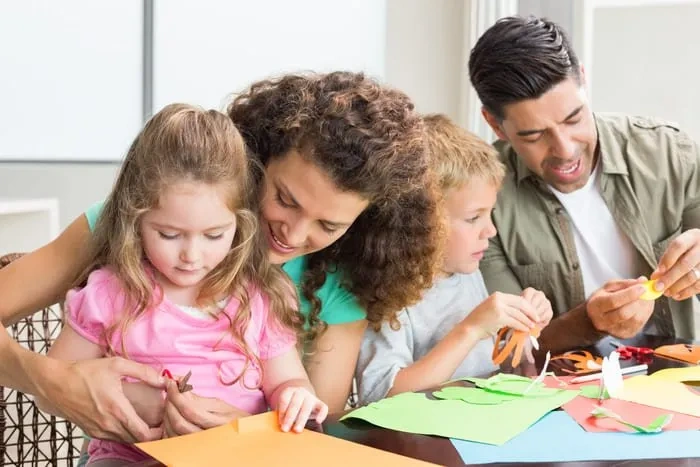
Image Source: Fairmont Schools
Crafting becomes especially meaningful when projects strengthen emotional bonds between family members and loved ones. These connection-building activities create lasting memories beyond the finished product itself.
Mail a hug to a loved one
For separated families or distant relatives, a mailed hug brings comfort through a simple yet touching craft. Create one by having your child:
- Paint both hands completely with washable craft paint
- Press handprints onto cardstock, leaving space between them
- Cut out the handprints once dry
- Measure your child’s arm span with ribbon or streamer
- Staple each end of the ribbon to a handprint
Fold the arms inward to fit your envelope and include a sweet note. This thoughtful gesture “puts a huge smile” on recipients’ faces, especially those serving overseas. Sending a paper hug is a heartfelt arts and crafts for kids activity that nurtures emotional bonds.
Kids can express love through mail with this creative and simple arts and crafts for kids project.
🕰️ Create a family time capsule
Time capsules preserve special moments for future discovery. Choose a sturdy, weather-resistant container like a stainless steel capsule or glass jar. Include photographs, handwritten letters, artwork, and souvenirs from important occasions. Add silica gel packets to prevent moisture damage, then seal your capsule securely. Store indoors in a consistent-temperature location and set a specific future date for opening.
Time capsules are reflective arts and crafts for kids that preserve memories for years to come.
Include notes and photos in this sentimental arts and crafts for kids project to deepen family connections

📬 Make a mailbox for home messages
Construct simple paper plate mailboxes by cutting one plate in half, stapling the half to a whole plate, and decorating with markers and stickers. Alternatively, transform cardboard boxes into more elaborate mailboxes with paint and decorations. Place writing materials nearby and encourage family members to leave notes for each other, subsequently creating an ongoing conversation that strengthens family bonds.
Creating paper or cardboard mailboxes makes arts and crafts for kids interactive and emotionally rewarding.
Encourage family communication with homemade mailboxes as an arts and crafts for kids idea.
🧠 Conclusion – Arts And Crafts For Kids
Arts and crafts offer children far more than just entertainment. Throughout this article, we’ve explored numerous projects that transform ordinary household items into extraordinary creations. These activities certainly develop creativity while simultaneously building essential skills like patience, problem-solving, and fine motor coordination.
What makes these crafts truly special? First, they require minimal investment. Those paper plates, cardboard boxes, and empty containers sitting in your recycling bin actually represent unlimited creative potential. Second, these projects adapt easily to different ages and skill levels. Your toddler might enjoy simple sponge printing while your older child tackles a cardboard robot construction.

Beyond the fun factor, these crafts teach valuable lessons. The water microscope introduces scientific principles, bubble painting demonstrates color theory, and recycled instruments explain sound vibrations. Additionally, crafts like family time capsules and mailed hugs build emotional connections that last far longer than the projects themselves.
We hope these ideas inspire you to look around your home with fresh eyes. That empty cereal box? A potential puppet theater. Those toilet paper rolls? Future binoculars for backyard exploration. The possibilities truly seem endless when we embrace creativity.
Remember, the true value lies not just in the finished products but in the process itself. Kids learn through experimentation, develop confidence through completion, and experience joy through creation. Start small with paper plate animals, then gradually attempt more complex projects as your child’s skills grow.
Most importantly, enjoy these moments together. These shared creative experiences build memories while simultaneously developing those crucial cognitive connections we mentioned at the beginning. So gather your household supplies, clear some table space, and prepare for crafting adventures that will benefit your children now and well into the future.
Arts and crafts for kids build not only creativity but essential cognitive and emotional skills.
From science to art and connection, every project proves that arts and crafts for kids have endless value.
💡 Transform everyday household items into engaging learning experiences that develop creativity, motor skills, and family bonds while keeping kids entertained.
• Use what you have: Paper plates, toilet rolls, and cardboard boxes become animals, binoculars, and robots without buying expensive craft supplies.
• Combine fun with learning: Projects like bubble painting teach color theory while recycled guitars demonstrate sound vibrations through hands-on exploration.
• Build connections through crafting: Create family time capsules and mail handprint hugs to strengthen emotional bonds with loved ones near and far.
• Start simple, then advance: Begin with basic sponge stamps and progress to complex cardboard castles as children’s skills and confidence grow.
• Embrace the process over perfection: The real value lies in experimentation, problem-solving, and shared creative moments that build lasting memories and cognitive development.
✅ These accessible projects prove that meaningful arts and crafts don’t require expensive materials—just imagination and items you already have at home. QuickGuideHub.com
🛍️ Looking for reusable products?
✅ Visit our eco collection on eBay: Trendigoshop Store

❓ Frequently Asked Questions (FAQ)
Q1: What simple crafts can kids make with everyday household items?
A1: Kids can create many fun projects using common household items. Some ideas include making paper plate animals, creating binoculars from toilet paper rolls, and designing sponge stamps for printing. These crafts require minimal supplies and are great for developing creativity and fine motor skills..
Q2: How can arts and crafts benefit children’s development?
A2: Arts and crafts activities offer numerous benefits for children’s development. They help improve fine motor skills, encourage problem-solving, boost creativity, and enhance patience. Additionally, crafting can aid in cognitive development by engaging multiple brain areas simultaneously.
Q3: What are some educational craft projects for kids?
A3: Several craft projects can be both fun and educational. For example, building a recycled guitar teaches about sound vibrations, painting with bubbles explores color mixing, and making a water microscope introduces magnification concepts. These projects combine hands-on learning with creative expression.
Q4: How can crafts encourage outdoor play and explora?
A4: Crafts can inspire outdoor play through projects like DIY sidewalk chalk paint, homemade bubble wands, and nature collages. These activities encourage children to interact with their environment, observe nature more closely, and enjoy creative expression in an outdoor setting.
Q5: Are there craft projects that can help strengthen family bonds?
A5: Yes, there are several craft projects that can strengthen family connections. Creating a family time capsule, making a “mailed hug” for distant loved ones, or building a home message mailbox are all activities that encourage communication and create shared memories among family memb.
References
[1] – https://prescolaireus.com/index.php/news/creative-recycled-art-projects-for-kids
[2] – https://www.learningherenthere.com/kids-crafts-1/easy-monster-puppet-craft
[3] – https://www.nancy-straughan.com/blog/diy-cardboard-toy-camera

🎨 Crafting Basics: A Beginner’s Guide
Take your first step into the world of arts and crafts for kids. Learn how to transform everyday household items into creative masterpieces.
🧪 Science Through Play: What Kids Learn
Explore how DIY crafts like bubble painting or water microscopes teach scientific concepts such as color theory, sound, and magnification—without textbooks.
👨👩👧 Meaningful Projects That Truly Connect
Discover the most heartwarming arts and crafts for kids—like mailing a hug or building a family time capsule—that build strong emotional bonds.
