
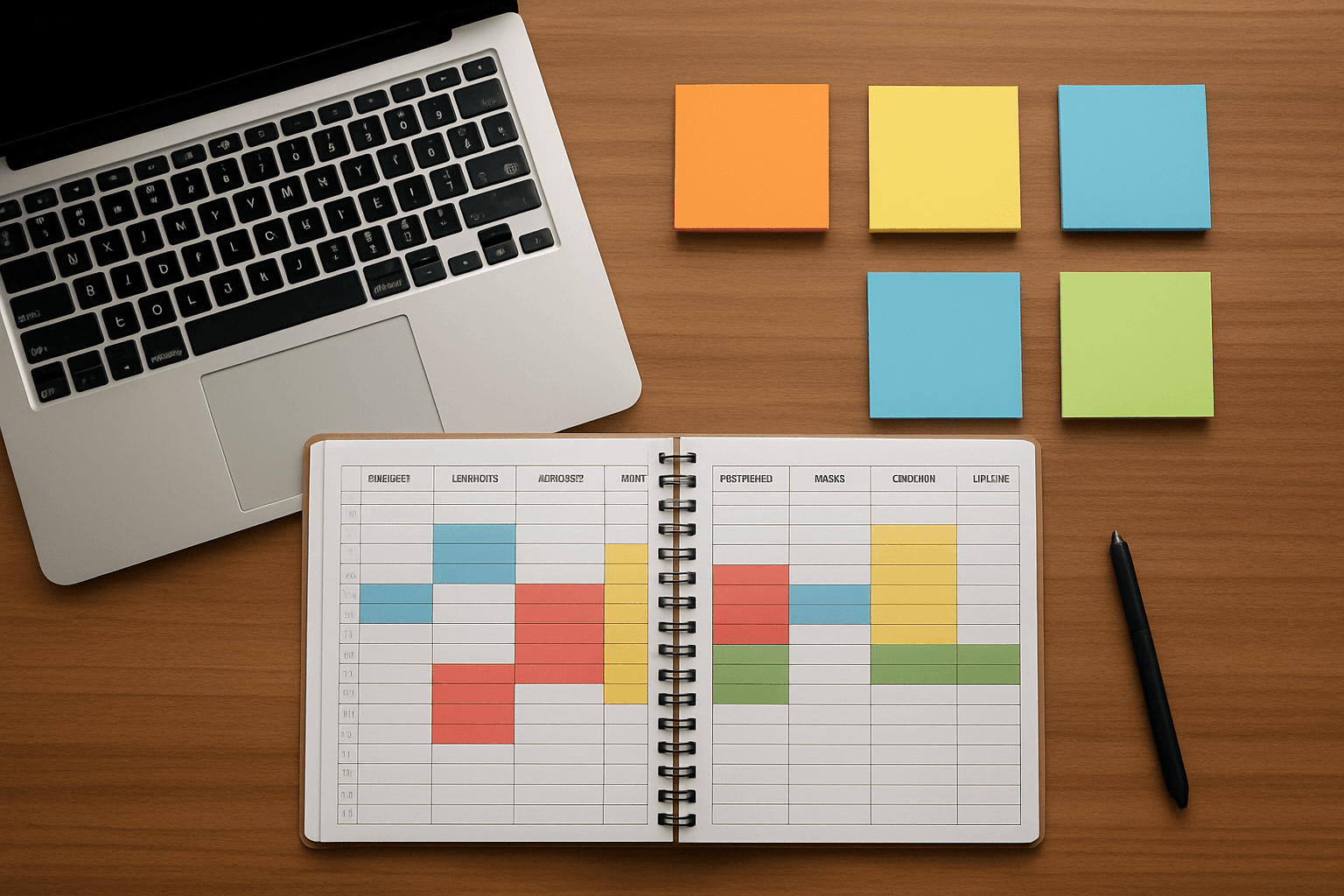

The Most Effective Time-Blocking Techniques for Engineers
The most effective time-blocking techniques for engineers transform chaotic workdays into structured, high-productivity sessions by dividing time into dedicated blocks for specific tasks. For engineers—whether software developers, hardware designers, or systems architects—this method eliminates context-switching and creates predictable windows for deep work. Instead of reacting to emails and Slack messages all day, you allocate precise time slots for coding, debugging, documentation, and meetings, ensuring each activity receives full attention.

Time-blocking isn’t just about scheduling; it’s about engineering your day like you engineer software: with clear inputs, outputs, and measurable results. Studies from the American Psychological Association show that switching between tasks can reduce productivity by up to 40%, making time-blocking not just helpful but essential for engineers who juggle multiple technical domains. By segmenting your calendar into focused blocks, you prevent the mental fatigue that comes from constant interruptions and instead create momentum that carries you through complex challenges. This section covers practical details about The most effective time-blocking.
This guide explores the most effective time-blocking techniques for engineers, backed by data and real-world engineering practices. You’ll discover how to align your block schedule with your cognitive peaks, use tools like Jira and GitHub to enforce boundaries, and even automate reminders to protect your focus. Whether you’re working on a tight deadline or prototyping a new feature, these methods will help you reclaim control over your day and deliver higher-quality work with less stress.
Why Engineers Need Time-Blocking More Than Anyone
Engineers operate in a world of constant interruptions—urgent bug reports, last-minute design reviews, and endless standup meetings—yet their work demands deep concentration to solve problems that require hours of uninterrupted focus. Unlike roles with predictable rhythms, engineering work often involves debugging code that behaves unpredictably, designing systems that must scale, or writing documentation that clarifies complex logic. Without structured time-blocking, engineers risk spending most of their day in reactive mode, bouncing between tasks without ever achieving flow state. In depth, The most effective time-blocking stands out as a core theme.
Research from the University of California, Irvine found that it takes an average of 23 minutes and 15 seconds to return to a task after an interruption. For engineers, whose work often involves intricate problem-solving, the cost of these interruptions is particularly steep. A single Slack message or unplanned meeting can derail an entire coding session, forcing you to rebuild context and slow progress. Time-blocking acts as a shield against this fragmentation, creating protected periods where you can dive deep into technical challenges without the overhead of context recovery. Applying The most effective time-blocking knowledge helps in real situations.
Moreover, engineers often work across multiple time zones, collaborate with global teams, and manage dependencies that span weeks or months. Time-blocking provides the scaffolding to coordinate these efforts without losing sight of individual priorities. It also helps engineers who struggle with procrastination—they know they only have 90 minutes to finish a module before moving to the next block, which creates urgency and reduces the temptation to postpone tough tasks. In short, time-blocking isn’t just a productivity hack; it’s a survival strategy for engineers in high-pressure environments. In summary, you can take informed steps on The most effective time-blocking.
Managing Cognitive Load with Time-Blocking
Cognitive load theory explains why engineers benefit disproportionately from time-blocking. Unlike simple tasks, engineering work often requires juggling multiple mental models—understanding system architecture, debugging code paths, considering edge cases, and optimizing performance. Each switch between these mental models consumes mental energy, leading to fatigue and errors. By allocating dedicated blocks for specific types of work (e.g., debugging in the morning, design discussions in the afternoon), you reduce cognitive switching costs and preserve mental clarity. Overall, The most effective time-blocking is valuable for anyone exploring this topic.
For example, an engineer working on a microservices architecture might block Monday mornings for system design, Tuesday afternoons for unit testing, and Wednesday mornings for documentation. This segmentation ensures that each block aligns with the engineer’s natural cognitive state—fresh and analytical for design, methodical for testing, and reflective for documentation. Over time, this routine trains the brain to enter the right mental mode faster, making each block more productive than if the tasks were scattered throughout the day. Learning about The most effective time-blocking makes a real difference.
Best Time-Blocking Methods for Engineers
Not all time-blocking methods work equally well for engineers. The key is choosing techniques that match the nature of technical work: high variability, deep focus requirements, and frequent context switches. Below are the most effective strategies, tested by engineers in leading tech companies, along with when and how to use them. Research on The most effective time-blocking reveals interesting findings.
The Pomodoro Technique for Engineers
The Pomodoro Technique, traditionally used for creative work, can be adapted for engineers with slight modifications to account for technical depth. Instead of 25-minute sprints, engineers can use 50-minute blocks followed by 10-minute breaks, which better accommodates the complexity of debugging or writing algorithms. This extended focus period aligns with the natural attention span for deep work, which research from MIT suggests peaks at 45–90 minutes for complex tasks. Understanding The most effective time-blocking is key to success in this area.
To implement this, engineers can use tools like TomatoTimer or browser extensions that integrate with calendar apps. Start each block by defining a specific goal—e.g., “Fix the memory leak in the authentication module” or “Refactor the API gateway”—and stick to it until the timer goes off. The 10-minute breaks should be used for physical movement (e.g., stretching, walking) rather than screen time, as this helps reset the brain for the next block. This section covers practical details about The most effective time-blocking.
This method is particularly effective for engineers who struggle with procrastination or perfectionism. The short, time-bound blocks create urgency, while the breaks prevent burnout. Over time, engineers report fewer instances of “coding tunnel vision,” where they lose track of time and miss deadlines. For teams, this technique also improves visibility—managers can see which blocks are consistently productive and which are disrupted by meetings or other obligations. In depth, The most effective time-blocking stands out as a core theme.
Deep Work Blocks for Complex Problems
Deep work—the ability to focus without distraction on demanding tasks—is non-negotiable for engineers tackling hard problems like compiler design, performance optimization, or security patching. Cal Newport, in his book Deep Work, emphasizes that deep work requires long, uninterrupted periods, typically 2–4 hours. For engineers, this means blocking out entire mornings or afternoons for focused coding sessions, with no meetings, emails, or Slack messages allowed. Applying The most effective time-blocking knowledge helps in real situations.
A practical way to implement this is to reserve the first 2–3 hours of the day for deep work, when cognitive energy is highest. Use this time for the most challenging tasks, such as designing a new algorithm or troubleshooting a production outage. Pair this with a “no-meeting” policy during these blocks, communicated clearly to colleagues. Tools like Clockify or RescueTime can track deep work sessions and provide insights into productivity patterns. In summary, you can take informed steps on The most effective time-blocking.
Statistical Data: The most effective time-blocking techniques for en
For distributed teams, this might mean aligning deep work blocks across time zones. For example, an engineer in New York working from 8 AM–11 AM EST might pair their deep work block with a colleague in Berlin working from 2 PM–5 PM CET, ensuring global collaboration doesn’t disrupt focus. The key is consistency—once deep work becomes a habit, engineers find they can solve problems faster, write cleaner code, and reduce the need for last-minute fixes. Overall, The most effective time-blocking is valuable for anyone exploring this topic.
Agile Sprints for Sprint Planning
For engineers working in Agile environments, time-blocking dovetails seamlessly with sprint planning. Instead of treating sprints as abstract timeframes, engineers can break them into micro-blocks aligned with sprint goals. For example, a two-week sprint might include blocks for backlog refinement, daily standups, development, code reviews, and testing. Each block has a clear deliverable, such as “Complete 80% of feature X” or “Merge all PRs by Thursday 5 PM.” Learning about The most effective time-blocking makes a real difference.
| Sprint Activity | Time Block | Deliverable |
|---|---|---|
| Backlog Refinement | Monday 10–11 AM | Prioritized backlog with story points assigned |
| Development (Feature X) | Tuesday–Thursday 9 AM–12 PM | Functional code with unit tests |
| Code Review | Friday 2–3 PM | 100% of PRs reviewed and approved |
| Testing & Deployment | Friday 3–4 PM | Feature deployed to staging environment |
This structured approach ensures that sprint goals are met without the chaos of last-minute crunches. Engineers can visualize their progress daily and adjust blocks as needed—for example, trading a testing block for extra development time if a feature is behind schedule. Tools like Jira or Trello can be configured to reflect these time blocks, making it easy to track progress and communicate with stakeholders. Research on The most effective time-blocking reveals interesting findings.
Meeting-Free Days for Uninterrupted Work
Meetings are the #1 productivity killer for engineers, consuming an average of 23 hours per week according to a 2022 study by Harvard Business Review. The solution? Designate one or two days per week as “meeting-free,” reserving those days for deep work, coding, and problem-solving. Companies like Shopify and GitLab have adopted this policy with remarkable results, reporting up to 30% increases in engineering output. Understanding The most effective time-blocking is key to success in this area.
To implement this, engineers can block their calendars on Wednesday and Friday as meeting-free days, for example, and communicate this policy to their teams. Use this time for high-impact work like system architecture reviews, performance benchmarking, or writing technical documentation. Pair this with a “no-meeting” Slack status or calendar message to signal availability. This section covers practical details about The most effective time-blocking.
- Tip: For remote teams, use asynchronous communication tools like Loom or Notion to replace status meetings, further protecting focus time.
- Tip: Pair meeting-free days with time-blocking tools like Google Calendar or Clockwise to automatically reschedule non-urgent meetings to other days.
Tools and Resources for Time-Blocking
Choosing the right tools can make or break your time-blocking strategy. The best tools for engineers combine automation, integration with technical workflows, and real-time tracking. Below are the top tools and resources, categorized by use case, along with tips for maximizing their effectiveness. In depth, The most effective time-blocking stands out as a core theme.
Calendar Tools for Block Scheduling
Calendar apps are the backbone of time-blocking, but not all calendars are created equal. Engineers need tools that support recurring blocks, time zone adjustments, and integration with task managers like Jira or GitHub. Google Calendar remains the gold standard due to its flexibility and third-party integrations. Engineers can create color-coded blocks for different types of work (e.g., red for debugging, green for meetings) and use the “Focus Time” feature to block distractions. Applying The most effective time-blocking knowledge helps in real situations.
Clockwise takes this further by automatically optimizing schedules to protect focus time. It analyzes your existing calendar and suggests block adjustments, such as moving low-priority meetings to less productive times. For distributed teams, Clockwise’s time zone support ensures blocks are aligned across global calendars, preventing scheduling conflicts. In summary, you can take informed steps on The most effective time-blocking.
Another powerful option is Reclaim.ai, which uses AI to schedule blocks based on your priorities and habits. For example, if you’re most productive in the morning, Reclaim will protect those hours for deep work while shifting meetings to afternoons. It also integrates with tools like Slack and Zoom to suggest optimal meeting times based on availability. Overall, The most effective time-blocking is valuable for anyone exploring this topic.
Task Managers for Block Accountability
Task managers like Trello, Asana, or Notion help engineers break work into actionable blocks and track progress. The key is to link tasks directly to calendar blocks. For example, a Trello card labeled “Optimize Database Queries” can be assigned to a 2-hour block on Tuesday morning. Tools like Todoist or ClickUp offer similar functionality with additional features like time tracking and sprint planning. Learning about The most effective time-blocking makes a real difference.
Notion is particularly popular among engineers for its ability to combine task management with documentation. You can create a “Time-Blocking Dashboard” that lists all your blocks for the week, along with linked tasks, deadlines, and progress indicators. This centralizes your workflow and reduces the cognitive load of switching between tools. Research on The most effective time-blocking reveals interesting findings.
Automation Tools for Block Enforcement
Automation is the secret weapon for engineers who struggle to stick to their blocks. Tools like IFTTT or Zapier can automate reminders, sync blocks across tools, and even mute notifications during focus sessions. For example, you can set up a Zap that sends a Slack reminder 10 minutes before a deep work block, then silences notifications for the duration of the block. Understanding The most effective time-blocking is key to success in this area.
Focusmate takes this a step further by pairing you with a virtual coworking partner for accountability. You schedule a 50-minute block with a partner, and both of you commit to working without distractions. This is especially effective for engineers who work remotely and struggle with self-discipline. This section covers practical details about The most effective time-blocking.
Another automation gem is RescueTime, which tracks your time usage and provides detailed reports on how much of your day is spent in deep work vs. reactive tasks. For engineers, this data is invaluable for identifying patterns—e.g., “I waste 2 hours daily on Slack interruptions”—and adjusting blocks accordingly. In depth, The most effective time-blocking stands out as a core theme.
Common Mistakes to Avoid in Time-Blocking
Even the most disciplined engineers can fall into traps that undermine their time-blocking efforts. The most common mistakes include over-scheduling, ignoring cognitive rhythms, and failing to adapt blocks when circumstances change. Here’s how to avoid them and keep your time-blocking strategy effective. Applying The most effective time-blocking knowledge helps in real situations.
The Danger of Over-Scheduling
It’s tempting to fill every hour of your calendar with productive blocks, but this often backfires. Engineers who over-schedule risk burning out, missing deadlines, or losing flexibility when unexpected issues arise. A realistic schedule should include buffer time—at least 20% of your day—for breaks, transitions, and emergencies. For example, if you block 8 hours for coding, reserve 2 hours for emails, meetings, or debugging unforeseen issues. In summary, you can take informed steps on The most effective time-blocking.
Another form of over-scheduling is treating blocks as rigid deadlines rather than flexible frameworks. If a block isn’t working—e.g., you’re stuck on a problem and need more time—adjust the block rather than forcing yourself to stick to it. Tools like Clockify can help track how long tasks actually take vs. how long you planned, allowing you to refine your blocks over time. Overall, The most effective time-blocking is valuable for anyone exploring this topic.
Finally, avoid scheduling blocks for tasks that don’t require deep focus. Administrative work, quick emails, and status updates can often be batched into shorter, less rigid blocks. For example, reserve 30 minutes at the end of the day for emails rather than scattering them across multiple blocks. Learning about The most effective time-blocking makes a real difference.
Ignoring Your Cognitive Rhythms
Time-blocking only works if it aligns with your natural energy levels. Engineers who schedule deep work blocks during their least productive hours (e.g., post-lunch slumps) will struggle to maintain focus. Instead, use tools like RescueTime to track your productivity patterns and schedule blocks accordingly. For most people, mornings are ideal for deep work, while afternoons are better for meetings or lighter tasks.
Another cognitive rhythm to consider is your “flow state” triggers. Some engineers enter flow after a warm-up (e.g., reviewing code or planning), while others need complete silence. Experiment with different block structures to find what works best for you. For example, try a “warm-up block” (30 minutes of reviewing code or planning) before diving into a deep work block.
Don’t forget to account for your “off-peak” hours. If you’re a night owl, schedule creative or strategic blocks for evening hours. The goal is to work with your brain, not against it.
Failing to Adapt Blocks
Time-blocking isn’t a set-it-and-forget-it strategy. Engineers must regularly review their blocks to ensure they’re still effective. Ask yourself:
Use weekly retrospectives to adjust blocks. For example, if you consistently miss your coding blocks because of meetings, consider moving them to a meeting-free day. If your deep work blocks are too short, extend them to 3–4 hours. Tools like Notion or Trello can help track these adjustments and visualize progress over time.
Finally, don’t be afraid to experiment. If a block isn’t working, try a different structure or tool. The best time-blocking strategy is the one that evolves with your work and lifestyle.
Real-World Examples from Top Engineers
To bring these techniques to life, let’s look at how engineers at top tech companies—Google, Microsoft, and GitLab—use time-blocking to maximize productivity. These examples showcase the adaptability of time-blocking across different roles, from software engineers to systems architects.
How a Google Software Engineer Uses Time-Blocking
A senior software engineer at Google blocks her day into four key segments:
Her secret? She uses Google Calendar’s “Focus Time” feature to block her mornings and communicates this policy to her team via Slack. She also pairs her deep work blocks with a “Do Not Disturb” status in Slack and uses RescueTime to track her productivity. The result? She consistently ships high-quality code and mentors junior engineers without burning out.
A Microsoft Systems Architect’s Block Strategy
A systems architect at Microsoft blocks his week into thematic days to align with his cognitive strengths:
He uses Notion to create a “Weekly Block Dashboard” that links each block to specific tasks and deadlines. This dashboard is shared with his team, ensuring transparency and accountability. By aligning his blocks with his natural rhythms—design on Mondays, coding on Tuesdays/Wednesdays—he maximizes both creativity and execution.
A GitLab Remote Engineer’s Async Workflow
At GitLab, a fully remote company, engineers rely on asynchronous time-blocking to collaborate across time zones. A backend engineer at GitLab blocks his day as follows:
His key tool is Clockwise, which automatically adjusts his blocks based on his priorities and the team’s needs. He also uses Focusmate for virtual coworking to stay accountable. The result? He maintains a healthy work-life balance while delivering high-quality work in a distributed team.
Ready to transform your engineering workflow? Start by blocking 2 hours tomorrow morning for deep work—no excuses. Use the Pomodoro Technique for engineers (50-minute blocks + 10-minute breaks) and track your progress with 🔰 Engaging Product Descriptions for Higher Sales. You’ll be amazed at how much more you accomplish when you control your time instead of letting it control
What is The most effective time-blocking?
This guide explains the essential ideas and practical applications.
Why does it matter?
Reliable information helps you make better decisions.
How do I get started?
Start with this article, then explore related guides on our website.
Who is it for?
Beginners and experienced readers alike will find value here.
Looking for more step-by-step tutorials? See the Practical How-To Guides hub.
Related guides: How to choose the right productivity app for your workflow · The evolution of remote work: Trends for 2027 and beyond